Fortæl dine venner om denne vare:
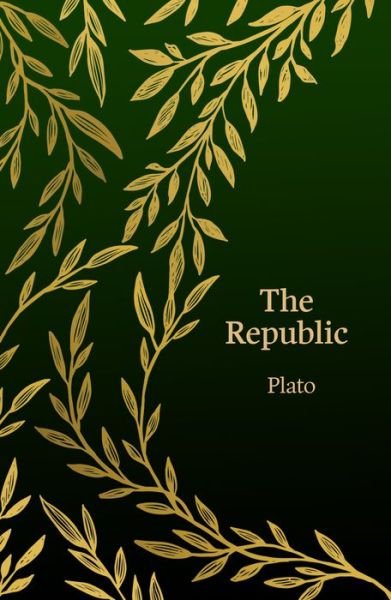
The Republic Plato
 Julegaver kan byttes frem til 31. januar



Findes også som:
-
Paperback BogNew edition(1997) DKK 82
- Paperback Bog (2007) DKK 105
- Paperback Bog (2015) DKK 106
- Paperback Bog (2018) DKK 119
- Paperback Bog (2013) DKK 131
- Hardcover bog (2023) DKK 137
- Paperback Bog (2011) DKK 138
- Paperback Bog (2017) DKK 138
- Paperback Bog (2010) DKK 138
- Paperback Bog (2015) DKK 142
- Paperback Bog (2015) DKK 142
- Paperback Bog (2010) DKK 145
- Paperback Bog (2017) DKK 152
- Paperback Bog (2014) DKK 152
- Paperback Bog (2017) DKK 158
- Paperback Bog (2011) DKK 161
- Paperback Bog (2020) DKK 162
- Hardcover bog (1993) DKK 167
-
Paperback BogGreek edition(2013) DKK 169
- Paperback Bog (2014) DKK 171
- Paperback Bog (2022) DKK 171
- Paperback Bog (2012) DKK 172
- Paperback Bog (2008) DKK 173
- Paperback Bog (2021) DKK 173
- Paperback Bog (2017) DKK 174
The Republic
Plato
Translated by Benjamin Jowett. The complete and unabridged master translation, acknowledged as the most superior and accurate version of the original. The Republic is one of Plato's most famous Socratic Dialogues, written around 380 BC. It deals with the definition of justice and the best ordering and character of government. Presented in the form of a discussion between Socrates and other leading personalities, the book concludes that the aristocratic state is the best form of government. It should be ruled by a philosopher king with a "soul of gold," supported by a ruling caste, made up of soldiers (who have "souls of silver"), whose job in the state is to force on the majority the order established by the rulers. The majority of the people (who have "souls of "bronze") are, in contrast to the first two classes, allowed to own property and produce goods for themselves. As the most intellectually and historically influential works of philosophy and political theory, "The Republic" represents one of the pinnacles of Classical Greek intellectual endeavor. Other topics discussed include the theory of forms, the immortality of the soul, and the roles of the philosopher and of poetry in society. About the author: One of the most important founding figures of Western philosophy, Plato (circa 428-348 BC) was a mathematician, a student of Socrates, writer of philosophical dialogues, and founder of the Academy in Athens, the first institution of higher learning in the Western world. His Dialogues have been used to teach a range of subjects, including philosophy, logic, ethics, rhetoric, religion, and mathematics. About the translator: Benjamin Jowett (1817-1893) was one of Cambridge University's most renowned and influential tutors and held the highly acclaimed Regius Professorship of Greek at that institution, as well as Master of Balliol College, Oxford.