Fortæl dine venner om denne vare:
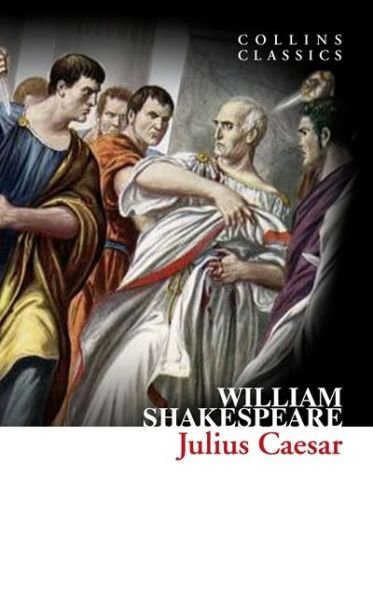
Julius Caesar William Shakespeare


Findes også som:
- Paperback Bog (2004) DKK 69
-
Paperback BogReissue edition(1988) DKK 88
- Paperback Bog (2015) DKK 102
-
Paperback Bog2nd Rev edition(1998) DKK 112
-
Paperback BogReprint edition(2012) DKK 118
- Paperback Bog (2016) DKK 123
- Paperback Bog (2016) DKK 126
- Paperback Bog (2012) DKK 126
- Paperback Bog (2012) DKK 126
- Paperback Bog (2012) DKK 126
- Paperback Bog (2016) DKK 133
- Paperback Bog (2021) DKK 133
- Paperback Bog (2012) DKK 140
-
Paperback BogGerman edition(2013) DKK 140
-
Paperback BogReprint edition(2011) DKK 141
- Paperback Bog (2019) DKK 145
- Paperback Bog (2017) DKK 154
- Bog (2023) DKK 158
- Paperback Bog (2024) DKK 163
- Paperback Bog (2013) DKK 163
- Paperback Bog (2023) DKK 173
-
Hardcover bogGerman edition(2013) DKK 175
- Hardcover bog (2012) DKK 175
- Hardcover bog (2012) DKK 175
- Hardcover bog (2012) DKK 175
Julius Caesar
William Shakespeare
Two tribunes, Flavius and Murellus, find scores of Roman citizens wandering the streets, neglecting their work in order to watch Julius Caesar's triumphal parade: Caesar has defeated the sons of the deceased Roman general Pompey, his archrival, in battle. The tribunes scold the citizens for abandoning their duties and remove decorations from Caesar's statues. Caesar enters with his entourage, including the military and political figures Brutus, Cassius, and Antony. A Soothsayer calls out to Caesar to "beware the Ides of March," but Caesar ignores him and proceeds with his victory celebration Cassius and Brutus, both longtime intimates of Caesar and each other, converse. Cassius tells Brutus that he has seemed distant lately; Brutus replies that he has been at war with himself. Cassius states that he wishes Brutus could see himself as others see him, for then Brutus would realize how honored and respected he is. Brutus says that he fears that the people want Caesar to become king, which would overturn the republic. Cassius concurs that Caesar is treated like a god though he is merely a man, no better than Brutus or Cassius. Cassius recalls incidents of Caesar's physical weakness and marvels that this fallible man has become so powerful. He blames his and Brutus's lack of will for allowing Caesar's rise to power: surely the rise of such a man cannot be the work of fate. Brutus considers Cassius's words as Caesar returns. Upon seeing Cassius, Caesar tells Antony that he deeply distrusts Cassius.
| Medie | Bøger Paperback Bog (Bog med blødt omslag og limet ryg) |
| Udgivet | 4. september 2016 |
| ISBN13 | 9781537473710 |
| Forlag | Createspace Independent Publishing Platf |
| Antal sider | 116 |
| Mål | 216 × 280 × 6 mm · 285 g |
| Sprog | Engelsk |


![Cover for William Shakespeare · Othello: Third Norton Critical Edition - Norton Critical Editions (Paperback Bog) [Third edition] (2026)](https://imusic.b-cdn.net/images/item/original/270/9781324072270.jpg?william-shakespeare-2026-othello-third-norton-critical-edition-norton-critical-editions-paperback-bog&class=scaled&v=1788182002)


![Cover for William Shakespeare · Julius Caesar (Modern Library Classics) (Paperback Bog) [Reprint edition] (2011)](https://imusic.b-cdn.net/images/item/original/368/9780812969368.jpg?william-shakespeare-2011-julius-caesar-modern-library-classics-paperback-bog&class=scaled&v=1409842317)
![Cover for William Shakespeare · Julius Caesar (Tredition Classics) (German Edition) (Paperback Bog) [German edition] (2013)](https://imusic.b-cdn.net/images/item/original/622/9783849547622.jpg?william-shakespeare-2013-julius-caesar-tredition-classics-german-edition-paperback-bog&class=scaled&v=1409860613)

![Cover for William Shakespeare · Julius Caesar - Cambridge School Shakespeare (Paperback Bog) [3 Revised edition] (2014)](https://imusic.b-cdn.net/images/item/original/519/9781107615519.jpg?william-shakespeare-2014-julius-caesar-cambridge-school-shakespeare-paperback-bog&class=scaled&v=1484864075)
![Cover for William Shakespeare · Julius Caesar - Classics Illustrated (Paperback Bog) [UK First Ed. edition] (2011)](https://imusic.b-cdn.net/images/item/original/564/9781906814564.jpg?william-shakespeare-2011-julius-caesar-classics-illustrated-paperback-bog&class=scaled&v=1487490964)
![Cover for William Shakespeare · Julius Caesar - Folger Shakespeare Library (Paperback Bog) [Reissue edition] (2004)](https://imusic.b-cdn.net/images/item/original/745/9780743482745.jpg?william-shakespeare-2004-julius-caesar-folger-shakespeare-library-paperback-bog&class=scaled&v=1409958235)
![Cover for William Shakespeare · Julius Caesar - Folger Shakespeare Library (Paperback Bog) [Reprint edition] (2011)](https://imusic.b-cdn.net/images/item/original/717/9781439196717.jpg?william-shakespeare-2011-julius-caesar-folger-shakespeare-library-paperback-bog&class=scaled&v=1440487692)
![Cover for William Shakespeare · Julius Caesar - Macmillan Collector's Library (Hardcover bog) [New edition] (2016)](https://imusic.b-cdn.net/images/item/original/954/9781909621954.jpg?william-shakespeare-2016-julius-caesar-macmillan-collector-s-library-hardcover-bog&class=scaled&v=1478005248)



![Cover for William Shakespeare · Julius Caesar - Shakespeare Editions (Paperback Bog) [New edition] (2000)](https://imusic.b-cdn.net/images/item/original/835/9781557831835.jpg?william-shakespeare-2000-julius-caesar-shakespeare-editions-paperback-bog&class=scaled&v=1406964223)


![Cover for William Shakespeare · Julius Caesar - The New Cambridge Shakespeare (Paperback Bog) [3 Revised edition] (2017)](https://imusic.b-cdn.net/images/item/original/748/9781107459748.jpg?william-shakespeare-2017-julius-caesar-the-new-cambridge-shakespeare-paperback-bog&class=scaled&v=1505118192)
![Cover for William Shakespeare · Julius Caesar - Wordsworth Classics (Paperback Bog) [Annotated edition] [Paperback] (1992)](https://imusic.b-cdn.net/images/item/original/223/9781853260223.jpg?william-shakespeare-1992-julius-caesar-wordsworth-classics-paperback-bog&class=scaled&v=1453678077)


![Cover for William Shakespeare · Julius Caesar Thrift Study Edition - Thrift Editions (Hardcover bog) [Edition edition] (2009)](https://imusic.b-cdn.net/images/item/original/776/9780486475776.jpg?william-shakespeare-2009-julius-caesar-thrift-study-edition-thrift-editions-hardcover-bog&class=scaled&v=1534976891)