Fortæl dine venner om denne vare:
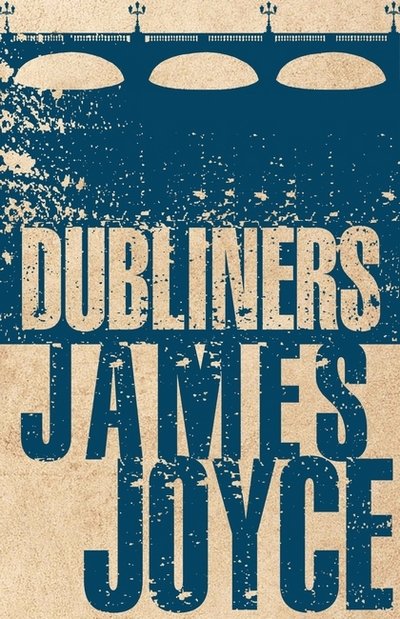
Dubliners James Joyce
Bestilles fra fjernlager
 Julegaver kan byttes frem til 31. januar



Findes også som:
- Paperback Bog (1990) DKK 88
- Paperback Bog (2024) DKK 98
- Paperback Bog (1993) DKK 101
-
Hardcover bogCollector's edition(2021) DKK 111
- Paperback Bog (2012) DKK 111
- Paperback Bog (2015) DKK 122
- Paperback Bog (2024) DKK 124
- Paperback Bog (2017) DKK 130
- Paperback Bog (2010) DKK 131
- Paperback Bog (2016) DKK 133
- Paperback Bog (2016) DKK 142
- Paperback Bog (2012) DKK 142
- Paperback Bog (2016) DKK 145
- Paperback Bog (2018) DKK 147
- Paperback Bog (2012) DKK 161
-
Hardcover bogReprint edition(1991) DKK 167
- Paperback Bog (2015) DKK 169
- Paperback Bog (2023) DKK 177
- Paperback Bog (2020) DKK 191
- Paperback Bog (2012) DKK 192
- Hardcover bog (2012) DKK 196
- Hardcover bog (1914) DKK 200
- Hardcover bog (1914) DKK 210
- Bog (2008) DKK 211
- Paperback Bog (2021) DKK 226
Dubliners
James Joyce
Dubliners is not a collection of short stories that were written at various periods and with various themes. It is clearly meant to be a unified work of art. Joyce said that he chose Dublin as the setting because it was "the center of paralysis." Yet he also stated that his purpose was to depict "the eventual spiritual liberation of my country." Such a "liberation" could occur only if the Dubliners were to shed the myths about Ireland and face their true situation. The stories of Dubliners are cunningly arranged. The first three stories clearly constitute a unit; they portray the life of a child in Dublin and are filled with disillusionment and a recognition of failure. "Araby" describes a failed quest as a nameless boy promises to go to a bazaar called Araby to buy a gift for a young girl. The boy is a dreamer who ignores daily life to dwell upon his beloved. It is significant that he invests her with religious imagery when he speaks of a "chalice" he is protecting. He also does not see her clearly; she is always a brown shape to him, and he worships his idea of her rather than her true self. On the day of his planned visit to Araby, his uncle is late, and it seems that the boy will not be able to go. Finally, the uncle enters, drunk, and gives him money. It is late when the boy arrives at the bazaar, and he finds not the magic and mystery of his dreams but a woman flirting with two men at a counter. He hears a voice announce that the light is out-a metaphor for the extinguishing of his quest. The epiphany is very harsh: "Gazing up into the darkness I saw myself as a creature driven and derided by vanity; and my eyes burned with anguish and anger." The boy feels ashamed of his earlier dreams; he, like the other Dubliners, is incomplete. His dreams have been smashed and he is filled with self-loathing.
| Medie | Bøger Paperback Bog (Bog med blødt omslag og limet ryg) |
| Udgivet | 9. december 2016 |
| ISBN13 | 9781541028692 |
| Forlag | Createspace Independent Publishing Platf |
| Antal sider | 152 |
| Mål | 152 × 229 × 8 mm · 213 g |
| Sprog | Engelsk |
![Cover for James Joyce · Ulysses: The 1922 Text (Paperback Bog) [Annotated edition] (2028)](https://imusic.b-cdn.net/images/item/original/987/9780241405987.jpg?james-joyce-2028-ulysses-the-1922-text-paperback-bog&class=scaled&v=1673903850)
![Cover for James Joyce · Breve til Nora (Paperback Bog) [1. udgave] (2027)](https://imusic-static.b-cdn.net/images/missing-tall.png)




![Cover for James Joyce · Dublinere (Paperback Bog) [1. udgave] (2023)](https://imusic.b-cdn.net/images/item/original/541/9788740698541.jpg?james-joyce-2023-dublinere-paperback-bog&class=scaled&v=1695532588)
![Cover for James Joyce · Dublinere (Paperback Bog) [1. udgave] (2023)](https://imusic.b-cdn.net/images/item/original/608/9788772389608.jpg?james-joyce-2023-dublinere-paperback-bog&class=scaled&v=1683954472)




![Cover for James Joyce · Penguin Readers Level 6: Dubliners (ELT Graded Reader): Abridged Edition - Penguin Readers (Paperback Bog) [Abridged edition] (2022)](https://imusic.b-cdn.net/images/item/original/583/9780241542583.jpg?james-joyce-2022-penguin-readers-level-6-dubliners-elt-graded-reader-abridged-edition-penguin-readers-paperback-bog&class=scaled&v=1626174051)

![Cover for James Joyce · Dubliners - The Viking critical library (Paperback Bog) [Revised edition] (1996)](https://imusic.b-cdn.net/images/item/original/749/9780140247749.jpg?james-joyce-1996-dubliners-the-viking-critical-library-paperback-bog&class=scaled&v=1409717023)
![Cover for James Joyce · Dubliners: Penguin Classics Deluxe Edition (Paperback Bog) [Penguin Classics Deluxe edition] (2014)](https://imusic.b-cdn.net/images/item/original/453/9780143107453.jpg?james-joyce-2014-dubliners-penguin-classics-deluxe-edition-paperback-bog&class=scaled&v=1406726595)

![Cover for James Joyce · Dubliners: A Norton Critical Edition - Norton Critical Editions (Paperback Bog) [Critical edition] (2006)](https://imusic.b-cdn.net/images/item/original/513/9780393978513.jpg?james-joyce-2006-dubliners-a-norton-critical-edition-norton-critical-editions-paperback-bog&class=scaled&v=1398621973)
![Cover for James Joyce · Dubliners (Everyman's Library Classics & Contemporary Classics) (Hardcover bog) [Reprint edition] (1991)](https://imusic.b-cdn.net/images/item/original/740/9780679405740.jpg?james-joyce-1991-dubliners-everyman-s-library-classics-contemporary-classics-hardcover-bog&class=scaled&v=1411083399)
![Cover for James Joyce · Dubliners - Vintage Classics (Paperback Bog) [Reprint edition] (1993)](https://imusic.b-cdn.net/images/item/original/906/9780679739906.jpg?james-joyce-1993-dubliners-vintage-classics-paperback-bog&class=scaled&v=1408550035)
![Cover for James Joyce · Dubliners - Enriched Classics (Paperback Bog) [Enriched Classic edition] (2005)](https://imusic.b-cdn.net/images/item/original/353/9781416500353.jpg?james-joyce-2005-dubliners-enriched-classics-paperback-bog&class=scaled&v=1627163159)

![Cover for James Joyce · Dubliners - Macmillan Collector's Library (Hardcover bog) [New edition] (2016)](https://imusic.b-cdn.net/images/item/original/629/9781509826629.jpg?james-joyce-2016-dubliners-macmillan-collector-s-library-hardcover-bog&class=scaled&v=1474968464)


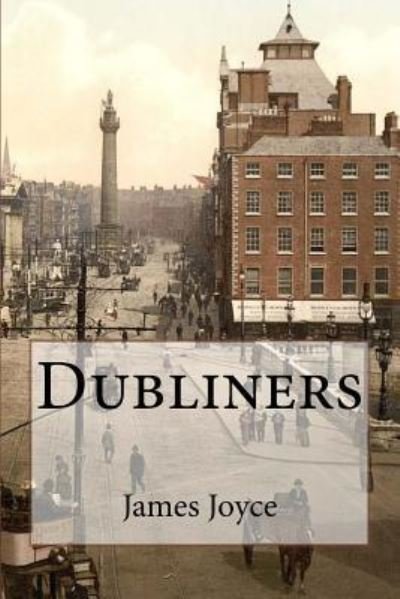

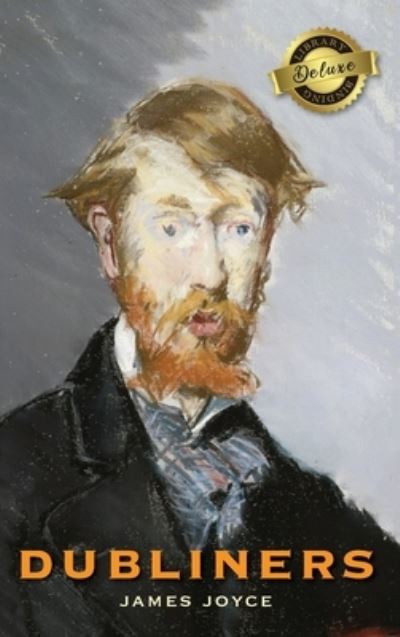
![Cover for James Joyce · Dubliners (Royal Collector's Edition) (Case Laminate Hardcover with Jacket) (Hardcover bog) [Royal Collector's edition] (2021)](https://imusic.b-cdn.net/images/item/original/113/9781774761113.jpg?james-joyce-2021-dubliners-royal-collector-s-edition-case-laminate-hardcover-with-jacket-hardcover-bog&class=scaled&v=1639191112)
![Cover for James Joyce · Dubliners - Canons (Paperback Bog) [Main - Canons reissue edition] (2019)](https://imusic.b-cdn.net/images/item/original/162/9781786896162.jpg?james-joyce-2019-dubliners-canons-paperback-bog&class=scaled&v=1576018161)
![Cover for James Joyce · Dubliners - Flame Tree Collectable Classics (Hardcover bog) [New edition] (2020)](https://imusic.b-cdn.net/images/item/original/864/9781787557864.jpg?james-joyce-2020-dubliners-flame-tree-collectable-classics-hardcover-bog&class=scaled&v=1580133901)
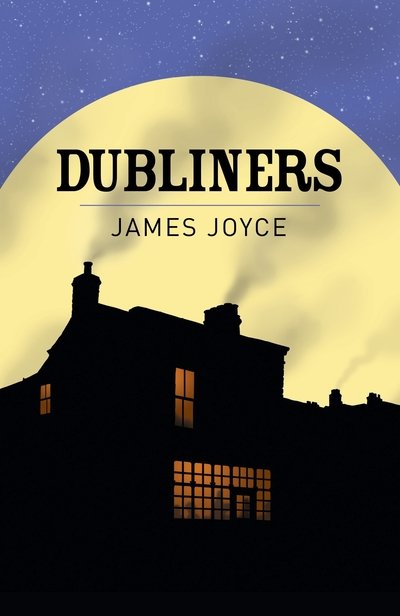
![Cover for James Joyce · Dubliners (Collector's Edition) - Wordsworth Collector's Editions (Hardcover bog) [Collector's edition] (2021)](https://imusic.b-cdn.net/images/item/original/106/9781840228106.jpg?james-joyce-2021-dubliners-collector-s-edition-wordsworth-collector-s-editions-hardcover-bog&class=scaled&v=1625699766)